Tesla's Map Shift: From Vision-Only Purity to Fleet-Built Data
Tesla is developing a proprietary mapping system to address persistent navigation errors, marking a significant departure from its long-standing rejection of map-based driving logic.
By Lucia Herrera ·
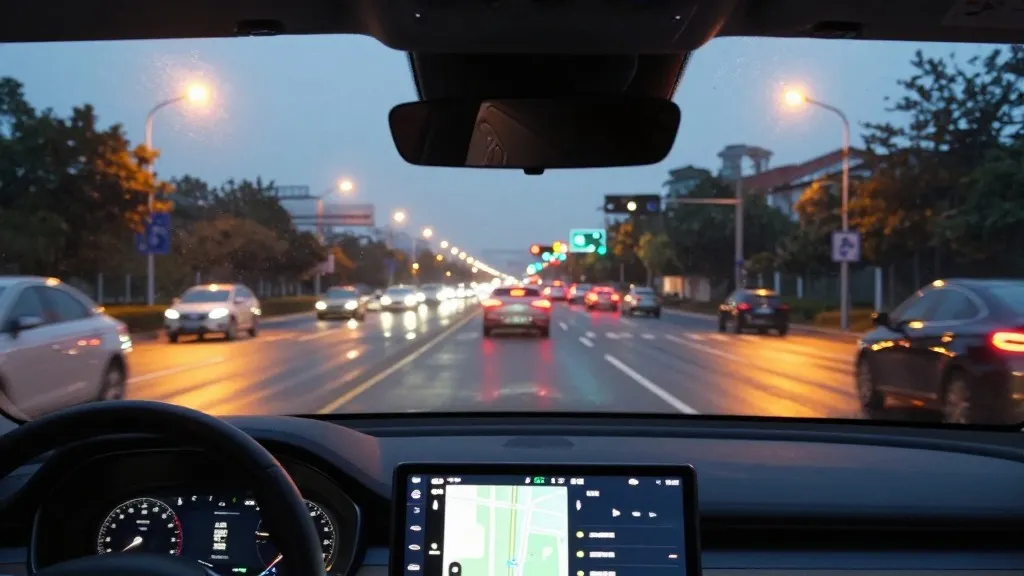
For years, the narrative surrounding Tesla’s autonomous driving ambitions has been defined by a singular, almost ideological stance: vision is enough, and maps are a crutch. That philosophy is now cracking under the weight of practical reality. Tesla is officially building its own maps, a move that directly addresses the most frequent complaints from drivers using its Full Self-Driving (FSD) system. The shift signals that the company’s fleet is no longer just collecting data for training neural networks, but is actively performing the same foundational work that competitors like Waymo have done for years: charting the roads to compensate for what the software cannot reliably infer on its own.
The pivot was announced on Tesla’s third-quarter 2026 earnings call, where the company’s Vice President of AI, Ashok Elluswamy, outlined the new strategy. The impetus came from a shareholder query noting that mapping remains a persistent pain point, specifically citing issues with speed limit recognition, parking, and route selection. Elluswamy agreed that Tesla should not depend on external providers for this critical data. He described a new, AI-based mapping architecture that will be fed by the collective learning of Tesla’s fleet. This system will not only handle standard navigation but will also adapt to individual driver preferences and respond to voice commands.
The rollout is phased. The new technology will initially handle the start and end of trips with the upcoming FSD version 15. Over the following months, it is expected to take over broader navigation, parking, and destination management. This is not a sudden about-face but the culmination of a decade-long debate. In 2015, when Autopilot launched, Tesla told Fortune it was creating high-precision maps with 100 times the granularity of standard navigation. However, by 2019, CEO Elon Musk had reversed course. At Autonomy Day, he labeled high-precision lane maps a “huge mistake” and a “really bad idea” that made systems “extremely brittle.” He famously dismissed lidar as a “fool’s errand,” arguing that cameras and AI could solve driving anywhere without the need for detailed cartography.
Seven years later, the practical limitations of that vision-only approach are becoming impossible to ignore. The specific failures Tesla is trying to fix—speed limits, parking, and routes—are fundamentally about understanding the physical environment. FSD has repeatedly struggled with basic road signage. Last month, a Belgian road safety group reported that FSD vehicles exceeded the limit in 55% of 30 km/h zones in Brussels, averaging 44 km/h. The error was often due to the car’s display incorrectly showing a 50 km/h limit. In the United States, the NHTSA is currently weighing an investigation into claims that Tesla Robotaxis speed through active school zones, a concern covering roughly 1,000 Model Y and Cybercab vehicles.
This new approach brings Tesla’s methodology closer to its primary rival than the company might prefer. Waymo maps cities by driving sensor-equipped vehicles through them before service launch, continuously updating those maps as its fleet operates. Tesla is now describing an identical loop: its cars collect data, which feeds a Tesla-built map that improves driving for every vehicle in the network. The primary hardware difference remains that Waymo’s vehicles are equipped with lidar, while Tesla relies on cameras. Furthermore, Tesla’s Robotaxi service already operates within small, geofenced areas, a constraint that aligns with a map-based strategy rather than a universal, map-free one.
While building proprietary maps is not inherently flawed—every serious self-driving program uses them—the historical messaging creates tension. Tesla sold FSD as a general solution that would work anywhere through vision alone. Now, with unsupervised FSD for consumer cars targeted for the second quarter of 2027, the company is adding the very layer it once dismissed. If a vision system cannot reliably read a simple speed limit sign, and the solution is a better map, the premise of pure vision is challenged. Tesla is effectively admitting that its fleet is a mapping fleet, solving the same problem as Waymo, just with different sensors.
The next phase will see the integration of these maps into the daily driving experience, starting with trip endpoints. As the system expands to cover navigation and parking, the gap between Tesla’s and Waymo’s approaches will narrow. For the Great Lakes and Ohio Valley, where dense urban grids and complex highway interchanges present unique challenges, this shift could mean more consistent behavior in school zones and parking lots. The decade-long debate over whether maps are necessary or brittle may finally be settling: they are necessary, and Tesla is finally building its own.
Source: Electrek